Buy mobilesolution.eu ?
We are moving the project
mobilesolution.eu .
Are you interested in purchasing the domain
mobilesolution.eu ?
domain@kv-gmbh.de · 0541-91531010
Buy mobilesolution.eu ?
How much wine and secco fits in a glass?
The amount of wine or secco that fits in a glass can vary depending on the size and shape of the glass. However, a standard wine glass typically holds around 5-6 ounces of liquid, while a standard champagne flute can hold around 6-8 ounces. It's important to note that overfilling a glass can affect the taste and aroma of the wine or secco, so it's best to pour in moderation. **
Is Frizzante Secco a sparkling wine, Prosecco, or a wine?
Frizzante Secco is a sparkling wine. It is a type of Italian sparkling wine that is known for its light and slightly fizzy character. While Prosecco is also a type of Italian sparkling wine, Frizzante Secco is a separate category of sparkling wine that is distinct from Prosecco. **


Similar search terms for Zibibbo-Secco-Lighea-Donnafugata
Top-Angebote
Products related to Zibibbo-Secco-Lighea-Donnafugata:
-
Zibibbo Secco in Pithos Cos 2024spontaneous fermentation in terracotta amphorae, the same ones in which the must will undergo maceration and aging, lasting about 6-7 months. After further aging in cement, bottling and commercialization take place. The Zibibbo in Pithos wine presents itself in the glass with a captivating golden yellow, as if to reveal its land of origin. Explosive right from the nose, due to the aromaticity of Zibibbo, it smells of apricot, candied orange peel, iodine, dried fruit. Sunny, in the true sense of the word, it is a wine that while not hiding its richness, expresses it gracefully. An almost unexpected sip, as the wine is fresh and poised, yet generous in its expressive variety. The low alcohol content encourages one to take another sip continuously. An unmissable bottle for lovers of wines with personality.spontaneous fermentation in terracotta amphorae, the same ones in which the must will undergo maceration and aging, lasting about 6-7 months. After further aging in cement, bottling and commercialization take place. The Zibibbo in Pithos wine presents itself in the glass with a captivating golden yellow, as if to reveal its land of origin. Explosive right from the nose, due to the aromaticity of Zibibbo, it smells of apricot, candied orange peel, iodine, dried fruit. Sunny, in the true sense of the word, it is a wine that while not hiding its richness, expresses it gracefully. An almost unexpected sip, as the wine is fresh and poised, yet generous in its expressive variety. The low alcohol content encourages one to take another sip continuously. An unmissable bottle for lovers of wines with personality.27,00 £*Shipping: 48,00 £Secure redirect to the provider
-
Zibibbo Secco 'Al Qasar' Rallo 2025Zibibbo "Al Qasar" is a dry aromatic white wine, a modern and ancient interpretation at the same time of the Zibibbo or Moscato d'Alessandria grape, traditionally reserved for the production of passito. The name pays homage to the ancient Arab culture, which in Sicily has promoted and enhanced the cultivation of this grape variety since the 9th century. Al-qasr in fact means "the castle," and it is under the Sicilianized name of "U Cassaru" that the most important street in the center of Palermo, now Vittorio Emanuele II, was known when the Arabs provided it with an imposing system of fortifications after their conquest in 831 BC. Cantine Rallo thus pays tribute to a very important page in Sicilian history, juxtaposing it with a white wine endowed with exuberant richness and sinuous, arabesque aromatic articulation. The Zibibbo grapes that give rise to the dry white wine "Al Quasar" are grown in the Patti Piccolo district of the municipality of Alcamo at an altitude of 250 meters according to certified organic agriculture. In the ancient Rallo cellars in Marsala, the grapes are crushed and the must fermented in steel tanks, with final aging of about 6 months. A rather simple production process, carried out entirely in neutral steel containers, allows the grapes to express their typical colorful aromatic profile without alteration. The fruit's natural sugars are carried out entirely during fermentation, so the wine produced is dry, lean and very fresh Rallo's Zibibbo "Al Qasar" is an arabesque of crisp and linear olfactory sensations: abstract, geometric yet concrete in the glass. Vegetal and floral motifs of orange blossom, lily of the valley, aromatic and medicinal herbs intertwine with stylized depictions of sweet citrus, exotic and tropical fruits, dates and fresh almonds, with greenish-blue inserts of seawater and saltiness. It is drinkable, however, and reveals on the palate great freshness, energetic vitality and lots of minerals in a streamlined, flowing progression, rhythmically set by hypnotic tambourines and ancient plucked string instruments. It pairs perfectly with intensely flavored foods such as oysters and coquillages, as well as blue cheeses and foie gras, as well as spicy and sweet-and-sour Middle Eastern cuisine, for multifaceted taste experiences, gustatory belly dances.12,00 £*Shipping: 48,00 £Secure redirect to the provider
-
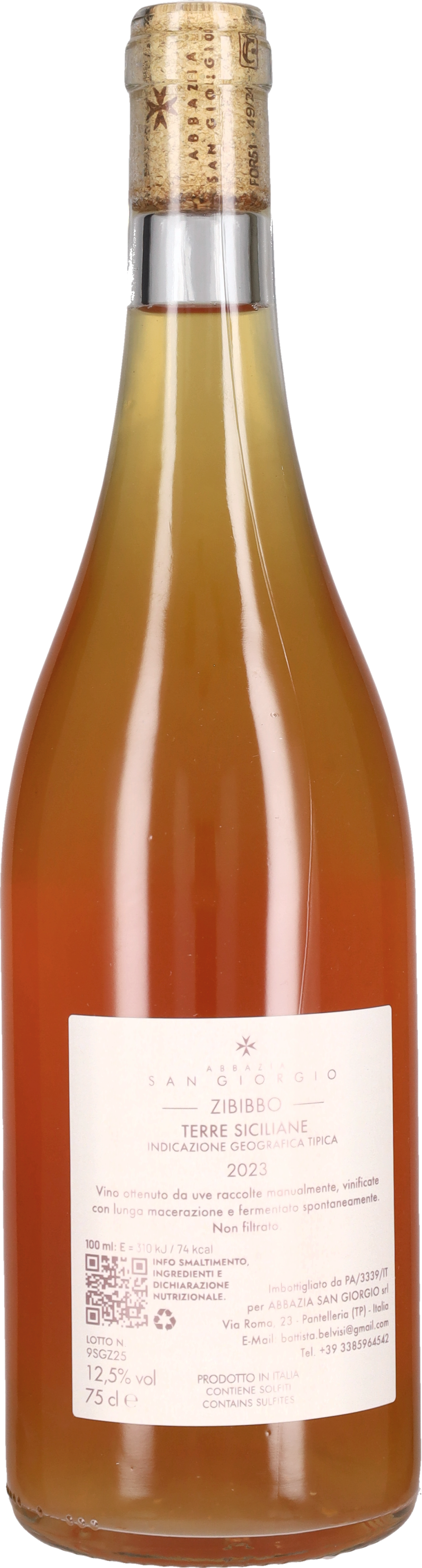
Zibibbo Secco 'Orange' Abbazia San Giorgio 2023"Orange" of Saint George Abbey is such in name and in fact. Its uniqueness lies in its origin, namely vineyards that are located in Pantelleria, an island halfway between Italy and Africa, so fascinating with its volcanic soils and vine tree farms, which have become a UNESCO World Heritage Site since 2014. The winery Abbazia San Giorgio is a small reality that rises in Khamma, in the north-west of the island, created by Battista and Beppe, who had the desire to enhance especially the Zibibbo through a completely biological management with biodynamic principles. Precision, simplicity and transparency are values that are immediately transmitted through the bottle, which has a minimalist and elegant label. Abbazia San Giorgio "Orange" comes from the grapes of Zibibbo, an autochthonous Sicilian grape, famous above all for the passito. The vines are scattered over 3 hectares of vineyards in tiny particles 300 meters above sea level, on soils rich in organic substances because volcanic. The manual harvest begins in September and the grapes are de-stemmed and pressed to be ready for spontaneous fermentation. The maceration in contact with the skins lasts 15/20 days, during which no sulfur is added. The aging is partly in steel silos and partly in chestnut barrels for 6 months. In the bottling phase neither filtration nor clarification takes place. "Orange" of Saint George Abbey is such in name and in fact. Its uniqueness lies in its origin, namely vineyards that are located in Pantelleria, an island halfway between Italy and Africa, so fascinating with its volcanic soils and vine tree farms, which have become a UNESCO World Heritage Site since 2014. The winery Abbazia San Giorgio is a small reality that rises in Khamma, in the north-west of the island, The dry Zibibbo "Orange" Abbazia San Giorgio smiles from the bottle with its magical orange color with slightly veiled amber reflections. It is an important presence, which becomes material in the glass, also through the scents that are manifested in all their power and radiance: the earth from which they come releases scents of Mediterranean and apricot notes, alongside orange peel and memories of honey and nuts. The sea on which the vines overlook offer iodized hints with touches of minerality of volcanic soils. In the mouth it is fresh and savory, with a tension of tannins that make "Orange" a lively and lively wine, with a long and exciting finish.28,00 £*Shipping: 48,00 £Secure redirect to the provider
-
Zibibbo Secco 'Integer' Marco De Bartoli 2023“Integer” è la versione di Zibibbo secco firmata Marco De Bartoli. Si tratta di un sapiente mix di tradizione e innovazione, tradotto nella vinificazione inusuale di un vitigno saldamente tradizionale. La cantina stessa fornisce spiegazioni riguardo al nome assegnatogli affermando che “Integer è integrale nel vitigno e nel territorio”. Un’integrità che deriva non solo dalla storia millenaria che lega alcune varietà di uve a questo angolo di Sicilia, ma anche dal modo di lavorare e di trattare la terra. Vige il massimo rispetto per l’ambiente, in casa De Bartoli, tanto che è stato ridotto ai minimi termini l’intervento dell’uomo in favore di una maggiore espressione del terroir. Sono stati aboliti tutti i trattamenti fisici, chimici e meccanici, così come le pratiche della vinificazione convenzionale. Marco De Bartoli Integer è ottenuto da uve Zibibbo in purezza. Provengono da viti di oltre 60 anni allevate ancora con un sistema di impianto ad alberello ed organizzate su terrazzamenti. Sono infatti collocati su pendii a picco sul mare, nella piccola isola di Pantelleria, ad un’altitudine di circa 350 metri sul livello del mare con suoli di natura vulcanica. In seguito alla vendemmia, eseguita rigorosamente a mano, i grappoli sono trasportati in cantina, dove vengono diraspati e leggermente pigiati. La fermentazione alcolica a carico del mosto si innesca spontaneamente in fase di macerazione per azione dei lieviti indigeni presenti sulle bucce, all’interno di vecchie botti di legno. Nelle stesse viene svolta anche la fermentazione malolattica, mentre l’affinamento avviene all’interno di fusti di rovere francese in presenza delle fecce fini, per 10 mesi. Una piccola parte del mosto non segue questo procedimento, ma bensì fermenta e matura in anfore di terracotta per circa 5 mesi. Lo Zibibbo secco “Integer” di Marco De Bartoli presenta un colore giallo dorato, impreziosito da ottima brillantezza e da riflessi che virano su toni ambrati. Al naso mostra un ricco ventaglio di profumi: dalla frutta gialla matura alla frutta secca, dalle noci alle note ossidative appena accennate. In bocca è ricco di gusto e di sensazioni, intensamente sapide e fresche, in equilibrio con la ricorrente leggera nota ossidativa. È un vino di effetto e di grande personalità.33,00 £*Shipping: 48,00 £Secure redirect to the provider



-
Can economic efficiency and productivity develop mutually?
Yes, economic efficiency and productivity can develop mutually. When businesses and industries become more efficient in their operations, they can produce more output with the same amount of input, leading to increased productivity. Similarly, when productivity increases, it can drive economic efficiency by reducing waste and improving resource allocation. Therefore, as businesses and industries focus on improving efficiency and productivity, they can reinforce and support each other's development. **
-
What is the difference between efficiency and productivity?
Efficiency refers to how well resources are utilized to achieve a specific goal or output, while productivity measures the output or results generated from a specific amount of input or resources. Efficiency focuses on minimizing waste and maximizing output with the resources available, while productivity is a measure of how much output is produced relative to the input used. In essence, efficiency is about doing things right, while productivity is about doing the right things. **
-
What are the connections between efficiency and productivity?
Efficiency and productivity are closely connected in that efficiency refers to the ability to accomplish a task with minimal waste, effort, or cost, while productivity refers to the rate at which goods or services are produced. When a process or system is efficient, it can lead to increased productivity because it allows for more output to be generated with the same amount of input. Conversely, when productivity is high, it often indicates that the resources and processes are being used efficiently. Therefore, improving efficiency can lead to increased productivity, and vice versa, as they both contribute to the overall effectiveness of a business or organization. **
-
Does increasing productivity lead to higher economic efficiency?
Yes, increasing productivity can lead to higher economic efficiency. When a company or economy can produce more output with the same input of resources, it can lead to lower production costs and higher profits. This can also lead to lower prices for consumers, which can increase overall economic welfare. Additionally, higher productivity can lead to increased competitiveness in the global market, which can further contribute to economic efficiency. **

What is the difference between productivity, efficiency, and profitability?
Productivity refers to the amount of output produced per unit of input, such as time or resources. Efficiency, on the other hand, focuses on how well resources are used to achieve a specific goal or output. Profitability, meanwhile, is a measure of how efficiently a company generates profit relative to its costs and expenses. In essence, productivity is about output per input, efficiency is about resource utilization, and profitability is about the bottom line of a business. **
What is the relationship between productivity and economic efficiency?
Productivity and economic efficiency are closely related concepts. Productivity refers to the amount of output produced per unit of input, such as labor or capital. When productivity increases, more output is produced with the same amount of input, leading to greater economic efficiency. Economic efficiency, on the other hand, refers to the optimal allocation of resources to maximize output and minimize waste. Therefore, higher productivity often leads to greater economic efficiency as resources are used more effectively to produce goods and services. Conversely, lower productivity can lead to inefficiencies in resource allocation and reduced overall economic efficiency. **
Top-Angebote
Products related to Zibibbo-Secco-Lighea-Donnafugata:
-
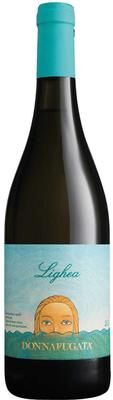
Zibibbo Secco 'Lighea' Donnafugata 2025The Zibibbo Secco “Lighea” by Donnafugata is born on our beautiful Sicilian island, considered a wine continent with a millennia-old history. The winery is family-run and for five generations the main idea has been to enhance, interpret, and give expression to the authenticity of the territory. The production is calibrated and respectful of nature and the phases of development and growth of the plants and raw materials. Brothers José and Antonio have treasured their father’s experience and tradition, directing production towards sustainability and ensuring that every phase of work is future-oriented. The relationship with art and culture is important: Stefano Vitale captures the identity of each wine and evokes the colors and landscapes of Sicily, designing unique and wonderful labels. The new vintage changes the graphics and is produced from a recycled glass bottle with a plastic cap collected from coastal areas. The vineyards of Zibibbo Secco “Lighea” by Donnafugata are located in the southwestern part of the island.The altitude ranges from 20 to 400 meters above sea level, and the soils are fertile, deep, with abundant minerals and volcanic sand; the sun and wind are the masters: winters are mild with abundant rainfall, and summers are hot, dry, and sunny. The bush-trained vine of Pantelleria is included in the UNESCO World Heritage List because it is a creative and sustainable practice. Manual harvesting usually begins around August 16 and ends in the first decade of September; in the winery, alcoholic fermentation takes place in steel and aging in tanks for 2/3 months before proceeding with bottling. The color of the Zibibbo Secco "Lighea" by Donnafugata is a bright straw yellow with greenish reflections. The bouquet of aromas is wide and varied, recalling characteristic notes of orange blossom, citrus fruits like cedar and bergamot, and notes of exotic fruit like lychee; on the palate, it is characterized by its dominant fruity and floral notes balanced by freshness, persistence, and pleasant minerality that call glass after glass. It pairs perfectly with dishes based on raw fish, shellfish, and fried vegetables or fish; perfect with all blue fish. It presents itself as an intriguing product from aperitif to dessert when you want to share an authentic product and ambassador of the genuine flavors of Sicily.15,00 £*Shipping: 48,00 £Secure redirect to the provider
-
Zibibbo Secco 'Taif' Cantine Fina 2025The Zibibbo Secco “Taif” by Cantine Fina is a slightly aromatic white wine, with a fresh and savory profile, produced inland north of Marsala. It is made from Moscato d’Alessandria or Zibibbo grapes, which are usually vinified after a period of drying to produce sweet wines, but are also proving to be very suitable for dry vinification to create fragrant, fresh, and fruity wines that are very pleasant to drink. The harmonious softness typical of the Moscato grape finds a perfect balance in the freshness and savoriness typical of the Marsala terroir. It is a balanced and expressive wine that pairs wonderfully with shellfish appetizers, fish appetizers, and first courses of seafood cuisine. “Taif” Zibibbo Secco is born in the splendid territory of Contrada Bausa, where Cantine Fina is located. It is a family-run business that has succeeded in recovering an ancient baglio and giving new impetus to viticulture in the beautiful area along the northern coast of Marsala, not far from the Saline and the natural reserve of the Isole dello Stagnone. In just over a decade, it has established itself as one of the most interesting realities in western Sicily, also thanks to a work of enhancement of the historical varieties of the territory, to which some international grape varieties have been added, which have adapted well to the area. The climate, warm and Mediterranean, is always mitigated by the iodine and saline breezes from the sea, which help create a unique habitat. The vineyards are managed under organic farming practices, in harmony with an unspoiled coastal environment and in tune with the desire to produce genuine wines, with the authentic scent and taste of the land of Sicily. The white wine “Taif” is one of the symbols of Cantine Fina. It is produced with the white grape variety that has always been present at the western tip of the island. The choice of a delicate dry vinification enhances its aromatic part, combined with a distinctive and particular marine character. The vineyards are cultivated on hills, at an altitude of about 300 meters above sea level. Fermentation takes place in stainless steel tanks.in steel. Before bottling, the wine matures in steel for a few months. In the glass, it presents a bright straw yellow with greenish reflections. The bouquet seduces with aromas of orange blossom, white flowers, citrus, hints of aromatic herbs, and notes of white fruit. On the palate, it has a warm and soft entry, with enveloping fruit that stretches harmoniously towards a savory and fresh finish, providing perfect balance to the sip.12,00 £*Shipping: 48,00 £Secure redirect to the provider
-
Zibibbo Secco in Pithos Cos 2024spontaneous fermentation in terracotta amphorae, the same ones in which the must will undergo maceration and aging, lasting about 6-7 months. After further aging in cement, bottling and commercialization take place. The Zibibbo in Pithos wine presents itself in the glass with a captivating golden yellow, as if to reveal its land of origin. Explosive right from the nose, due to the aromaticity of Zibibbo, it smells of apricot, candied orange peel, iodine, dried fruit. Sunny, in the true sense of the word, it is a wine that while not hiding its richness, expresses it gracefully. An almost unexpected sip, as the wine is fresh and poised, yet generous in its expressive variety. The low alcohol content encourages one to take another sip continuously. An unmissable bottle for lovers of wines with personality.spontaneous fermentation in terracotta amphorae, the same ones in which the must will undergo maceration and aging, lasting about 6-7 months. After further aging in cement, bottling and commercialization take place. The Zibibbo in Pithos wine presents itself in the glass with a captivating golden yellow, as if to reveal its land of origin. Explosive right from the nose, due to the aromaticity of Zibibbo, it smells of apricot, candied orange peel, iodine, dried fruit. Sunny, in the true sense of the word, it is a wine that while not hiding its richness, expresses it gracefully. An almost unexpected sip, as the wine is fresh and poised, yet generous in its expressive variety. The low alcohol content encourages one to take another sip continuously. An unmissable bottle for lovers of wines with personality.27,00 £*Shipping: 48,00 £Secure redirect to the provider
-
Zibibbo Secco 'Al Qasar' Rallo 2025Zibibbo "Al Qasar" is a dry aromatic white wine, a modern and ancient interpretation at the same time of the Zibibbo or Moscato d'Alessandria grape, traditionally reserved for the production of passito. The name pays homage to the ancient Arab culture, which in Sicily has promoted and enhanced the cultivation of this grape variety since the 9th century. Al-qasr in fact means "the castle," and it is under the Sicilianized name of "U Cassaru" that the most important street in the center of Palermo, now Vittorio Emanuele II, was known when the Arabs provided it with an imposing system of fortifications after their conquest in 831 BC. Cantine Rallo thus pays tribute to a very important page in Sicilian history, juxtaposing it with a white wine endowed with exuberant richness and sinuous, arabesque aromatic articulation. The Zibibbo grapes that give rise to the dry white wine "Al Quasar" are grown in the Patti Piccolo district of the municipality of Alcamo at an altitude of 250 meters according to certified organic agriculture. In the ancient Rallo cellars in Marsala, the grapes are crushed and the must fermented in steel tanks, with final aging of about 6 months. A rather simple production process, carried out entirely in neutral steel containers, allows the grapes to express their typical colorful aromatic profile without alteration. The fruit's natural sugars are carried out entirely during fermentation, so the wine produced is dry, lean and very fresh Rallo's Zibibbo "Al Qasar" is an arabesque of crisp and linear olfactory sensations: abstract, geometric yet concrete in the glass. Vegetal and floral motifs of orange blossom, lily of the valley, aromatic and medicinal herbs intertwine with stylized depictions of sweet citrus, exotic and tropical fruits, dates and fresh almonds, with greenish-blue inserts of seawater and saltiness. It is drinkable, however, and reveals on the palate great freshness, energetic vitality and lots of minerals in a streamlined, flowing progression, rhythmically set by hypnotic tambourines and ancient plucked string instruments. It pairs perfectly with intensely flavored foods such as oysters and coquillages, as well as blue cheeses and foie gras, as well as spicy and sweet-and-sour Middle Eastern cuisine, for multifaceted taste experiences, gustatory belly dances.12,00 £*Shipping: 48,00 £Secure redirect to the provider
-
How much wine and secco fits in a glass?
The amount of wine or secco that fits in a glass can vary depending on the size and shape of the glass. However, a standard wine glass typically holds around 5-6 ounces of liquid, while a standard champagne flute can hold around 6-8 ounces. It's important to note that overfilling a glass can affect the taste and aroma of the wine or secco, so it's best to pour in moderation. **
-
Is Frizzante Secco a sparkling wine, Prosecco, or a wine?
Frizzante Secco is a sparkling wine. It is a type of Italian sparkling wine that is known for its light and slightly fizzy character. While Prosecco is also a type of Italian sparkling wine, Frizzante Secco is a separate category of sparkling wine that is distinct from Prosecco. **
-
Can economic efficiency and productivity develop mutually?
Yes, economic efficiency and productivity can develop mutually. When businesses and industries become more efficient in their operations, they can produce more output with the same amount of input, leading to increased productivity. Similarly, when productivity increases, it can drive economic efficiency by reducing waste and improving resource allocation. Therefore, as businesses and industries focus on improving efficiency and productivity, they can reinforce and support each other's development. **
-
What is the difference between efficiency and productivity?
Efficiency refers to how well resources are utilized to achieve a specific goal or output, while productivity measures the output or results generated from a specific amount of input or resources. Efficiency focuses on minimizing waste and maximizing output with the resources available, while productivity is a measure of how much output is produced relative to the input used. In essence, efficiency is about doing things right, while productivity is about doing the right things. **
Similar search terms for Zibibbo-Secco-Lighea-Donnafugata
-
Zibibbo Secco 'Orange' Abbazia San Giorgio 2023"Orange" of Saint George Abbey is such in name and in fact. Its uniqueness lies in its origin, namely vineyards that are located in Pantelleria, an island halfway between Italy and Africa, so fascinating with its volcanic soils and vine tree farms, which have become a UNESCO World Heritage Site since 2014. The winery Abbazia San Giorgio is a small reality that rises in Khamma, in the north-west of the island, created by Battista and Beppe, who had the desire to enhance especially the Zibibbo through a completely biological management with biodynamic principles. Precision, simplicity and transparency are values that are immediately transmitted through the bottle, which has a minimalist and elegant label. Abbazia San Giorgio "Orange" comes from the grapes of Zibibbo, an autochthonous Sicilian grape, famous above all for the passito. The vines are scattered over 3 hectares of vineyards in tiny particles 300 meters above sea level, on soils rich in organic substances because volcanic. The manual harvest begins in September and the grapes are de-stemmed and pressed to be ready for spontaneous fermentation. The maceration in contact with the skins lasts 15/20 days, during which no sulfur is added. The aging is partly in steel silos and partly in chestnut barrels for 6 months. In the bottling phase neither filtration nor clarification takes place. "Orange" of Saint George Abbey is such in name and in fact. Its uniqueness lies in its origin, namely vineyards that are located in Pantelleria, an island halfway between Italy and Africa, so fascinating with its volcanic soils and vine tree farms, which have become a UNESCO World Heritage Site since 2014. The winery Abbazia San Giorgio is a small reality that rises in Khamma, in the north-west of the island, The dry Zibibbo "Orange" Abbazia San Giorgio smiles from the bottle with its magical orange color with slightly veiled amber reflections. It is an important presence, which becomes material in the glass, also through the scents that are manifested in all their power and radiance: the earth from which they come releases scents of Mediterranean and apricot notes, alongside orange peel and memories of honey and nuts. The sea on which the vines overlook offer iodized hints with touches of minerality of volcanic soils. In the mouth it is fresh and savory, with a tension of tannins that make "Orange" a lively and lively wine, with a long and exciting finish.28,00 £*Shipping: 48,00 £Secure redirect to the provider
-
Zibibbo Secco 'Integer' Marco De Bartoli 2023“Integer” è la versione di Zibibbo secco firmata Marco De Bartoli. Si tratta di un sapiente mix di tradizione e innovazione, tradotto nella vinificazione inusuale di un vitigno saldamente tradizionale. La cantina stessa fornisce spiegazioni riguardo al nome assegnatogli affermando che “Integer è integrale nel vitigno e nel territorio”. Un’integrità che deriva non solo dalla storia millenaria che lega alcune varietà di uve a questo angolo di Sicilia, ma anche dal modo di lavorare e di trattare la terra. Vige il massimo rispetto per l’ambiente, in casa De Bartoli, tanto che è stato ridotto ai minimi termini l’intervento dell’uomo in favore di una maggiore espressione del terroir. Sono stati aboliti tutti i trattamenti fisici, chimici e meccanici, così come le pratiche della vinificazione convenzionale. Marco De Bartoli Integer è ottenuto da uve Zibibbo in purezza. Provengono da viti di oltre 60 anni allevate ancora con un sistema di impianto ad alberello ed organizzate su terrazzamenti. Sono infatti collocati su pendii a picco sul mare, nella piccola isola di Pantelleria, ad un’altitudine di circa 350 metri sul livello del mare con suoli di natura vulcanica. In seguito alla vendemmia, eseguita rigorosamente a mano, i grappoli sono trasportati in cantina, dove vengono diraspati e leggermente pigiati. La fermentazione alcolica a carico del mosto si innesca spontaneamente in fase di macerazione per azione dei lieviti indigeni presenti sulle bucce, all’interno di vecchie botti di legno. Nelle stesse viene svolta anche la fermentazione malolattica, mentre l’affinamento avviene all’interno di fusti di rovere francese in presenza delle fecce fini, per 10 mesi. Una piccola parte del mosto non segue questo procedimento, ma bensì fermenta e matura in anfore di terracotta per circa 5 mesi. Lo Zibibbo secco “Integer” di Marco De Bartoli presenta un colore giallo dorato, impreziosito da ottima brillantezza e da riflessi che virano su toni ambrati. Al naso mostra un ricco ventaglio di profumi: dalla frutta gialla matura alla frutta secca, dalle noci alle note ossidative appena accennate. In bocca è ricco di gusto e di sensazioni, intensamente sapide e fresche, in equilibrio con la ricorrente leggera nota ossidativa. È un vino di effetto e di grande personalità.33,00 £*Shipping: 48,00 £Secure redirect to the provider
-
"""Donnafugata Lighea Dry Muscat 2024 White Wine - Italy""""""The Lighea has a brilliant straw yellow color with greenish reflections. The nose offers a rich and fragrant bouquet with classic notes of orange blossom combined with citrus scents (citron and bergamot) and exotic fruit (lychees). The fruity and..."27,97 $*Shipping: 0,00 $Secure redirect to the provider
-
"""Donnafugata Lighea Dry Muscat 2025 White Wine - Italy""""""Lighea 2025 is a brilliant straw yellow color with greenish tints. On the nose, notes of orange blossom, bergamot and citrus fruits. The fruity and floral notes reappear on the palate, accompanied by a pleasant freshness and persistence. Mineral..."32,97 $*Shipping: 0,00 $Secure redirect to the provider
-
What are the connections between efficiency and productivity?
Efficiency and productivity are closely connected in that efficiency refers to the ability to accomplish a task with minimal waste, effort, or cost, while productivity refers to the rate at which goods or services are produced. When a process or system is efficient, it can lead to increased productivity because it allows for more output to be generated with the same amount of input. Conversely, when productivity is high, it often indicates that the resources and processes are being used efficiently. Therefore, improving efficiency can lead to increased productivity, and vice versa, as they both contribute to the overall effectiveness of a business or organization. **
-
Does increasing productivity lead to higher economic efficiency?
Yes, increasing productivity can lead to higher economic efficiency. When a company or economy can produce more output with the same input of resources, it can lead to lower production costs and higher profits. This can also lead to lower prices for consumers, which can increase overall economic welfare. Additionally, higher productivity can lead to increased competitiveness in the global market, which can further contribute to economic efficiency. **
-
What is the difference between productivity, efficiency, and profitability?
Productivity refers to the amount of output produced per unit of input, such as time or resources. Efficiency, on the other hand, focuses on how well resources are used to achieve a specific goal or output. Profitability, meanwhile, is a measure of how efficiently a company generates profit relative to its costs and expenses. In essence, productivity is about output per input, efficiency is about resource utilization, and profitability is about the bottom line of a business. **
-
What is the relationship between productivity and economic efficiency?
Productivity and economic efficiency are closely related concepts. Productivity refers to the amount of output produced per unit of input, such as labor or capital. When productivity increases, more output is produced with the same amount of input, leading to greater economic efficiency. Economic efficiency, on the other hand, refers to the optimal allocation of resources to maximize output and minimize waste. Therefore, higher productivity often leads to greater economic efficiency as resources are used more effectively to produce goods and services. Conversely, lower productivity can lead to inefficiencies in resource allocation and reduced overall economic efficiency. **
* All prices are inclusive of VAT and, if applicable, plus shipping costs. The offer information is based on the details provided by the respective shop and is updated through automated processes. Real-time updates do not occur, so deviations can occur in individual cases. ** Note: Parts of this content were created by AI.