Buy mobilesolution.eu ?
We are moving the project
mobilesolution.eu .
Are you interested in purchasing the domain
mobilesolution.eu ?
domain@kv-gmbh.de · 0541-91531010
Buy mobilesolution.eu ?
What is critical rationalism?
Critical rationalism is a philosophical approach that emphasizes the importance of critical thinking and skepticism in the pursuit of knowledge. It was developed by philosopher Karl Popper and is based on the idea that knowledge can never be fully justified or proven, but can only be tested and criticized. Critical rationalism encourages the constant questioning and testing of theories and beliefs, and rejects the notion of absolute truth. It also emphasizes the importance of openness to new ideas and the willingness to revise or abandon theories in the face of new evidence. **
What does rationalism mean?
Rationalism is a philosophical belief that emphasizes the role of reason and logic in understanding the world. It holds that knowledge is primarily derived from reason and intellectual processes, rather than from sensory experience or religious faith. Rationalists believe that certain truths can be known a priori, or independently of experience, through the use of reason. This approach to knowledge contrasts with empiricism, which emphasizes the importance of sensory experience in acquiring knowledge. **


Similar search terms for Rationalism
Top-Angebote
Products related to Rationalism:
-
The Readers Paradise Psychology of Efficiency: Master Your Mind, Maximize Your Output by Rishav - Self-Help Paperback - Non Fiction Productivity BookDeadlines pile up, distractions multiply, and your to-do list never seems to shrink. Psychology of Efficiency: Master Your Mind, Maximize Your Output by Rishav goes beyond standard time-management advice to tackle the real root of low performance: the mind itself. Rather than offering another planner or app, this paperback guide explores the mental frameworks, habits, and triggers that quietly drain focus and output. Readers are shown how to identify exactly where attention leaks occur and how to close those gaps for good, building sustainable, high-level performance from the inside out. This brand new paperback is built around a simple idea: efficiency is first a psychological skill, not a scheduling trick. Rishav draws on practical psychology to show that thoughts shape actions, and actions determine results, so productivity becomes a manageable skill rather than an overwhelming task.2,99 £*Shipping: 2,99 £Secure redirect to the provider
-
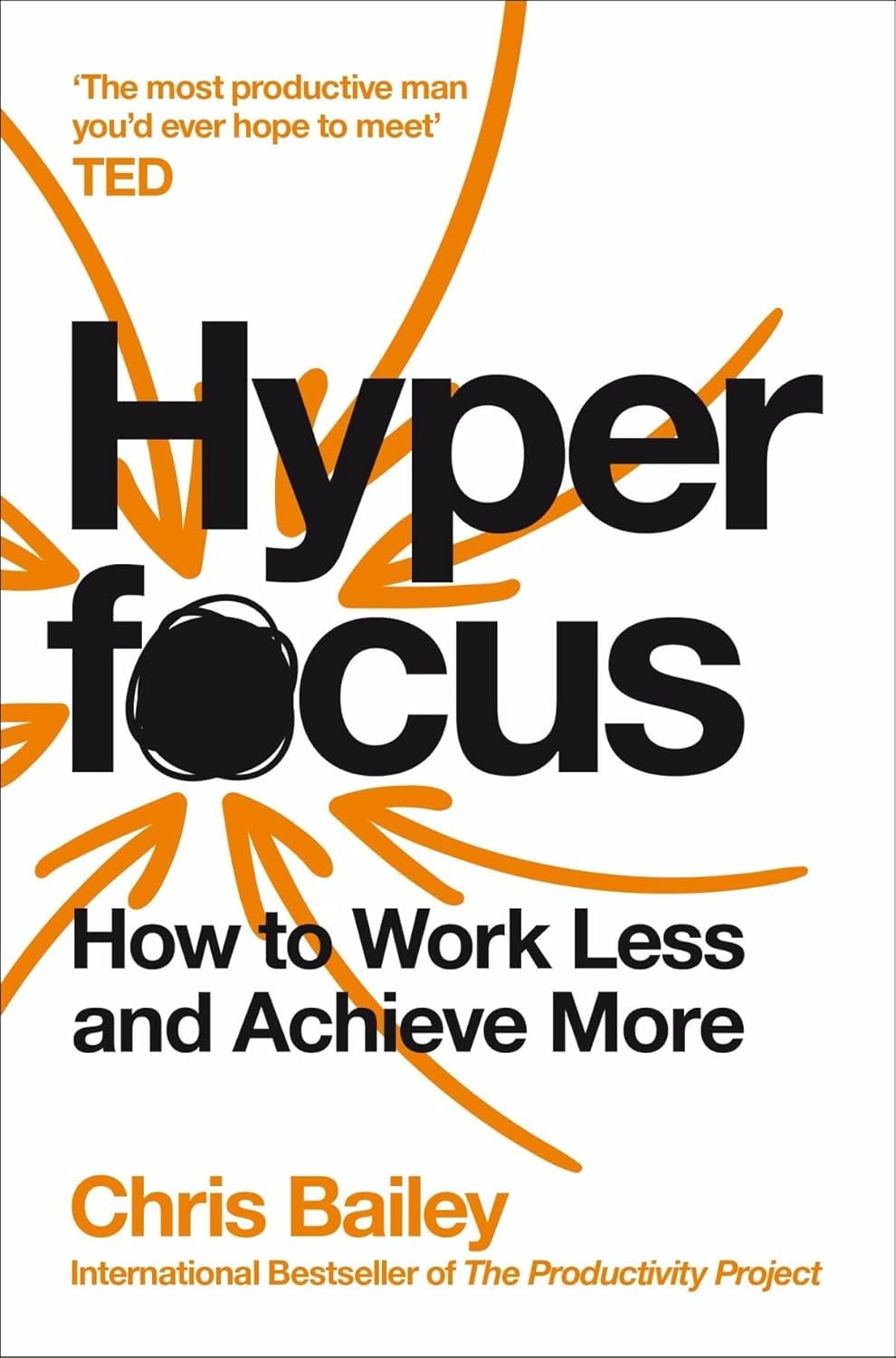
Various Publishers How To Talk To Anyone by Leil Lowndes & Hyperfocus by Chris Bailey - 2 Book Paperback Set - Communication & Productivity Self-Help - NewThis two-book paperback set includes 'How To Talk To Anyone: 92 Little Tricks for Big Success in Relationships' by Leil Lowndes and 'Hyperfocus: How to Be More Productive in a World of Distraction' by Chris Bailey. 'How To Talk To Anyone' delivers practical techniques for confident, memorable conversation, while 'Hyperfocus' offers a science-backed system for reclaiming attention and getting more done with less effort. The books are in new condition, published by HarperCollins and Pan Macmillan respectively, and are suitable for adult readers.9,99 £*Shipping: 2,99 £Secure redirect to the provider
-
Sesderma Reti Age 5 Liposomal Serum Anti-Aging Innovation 30mLA facial serum for wrinkles and signs of ageing. Reduces wrinkles and fine lines. Hydrates and strengthens barrier. Restores youthful radiance. 5-Retinoid System: smooths wrinkles, accelerates renewal, and boosts collagen. Biomimetic Peptides: fill expression lines by stimulating collagen synthesis.53,26 £*Shipping: 5,22 £Secure redirect to the provider
-
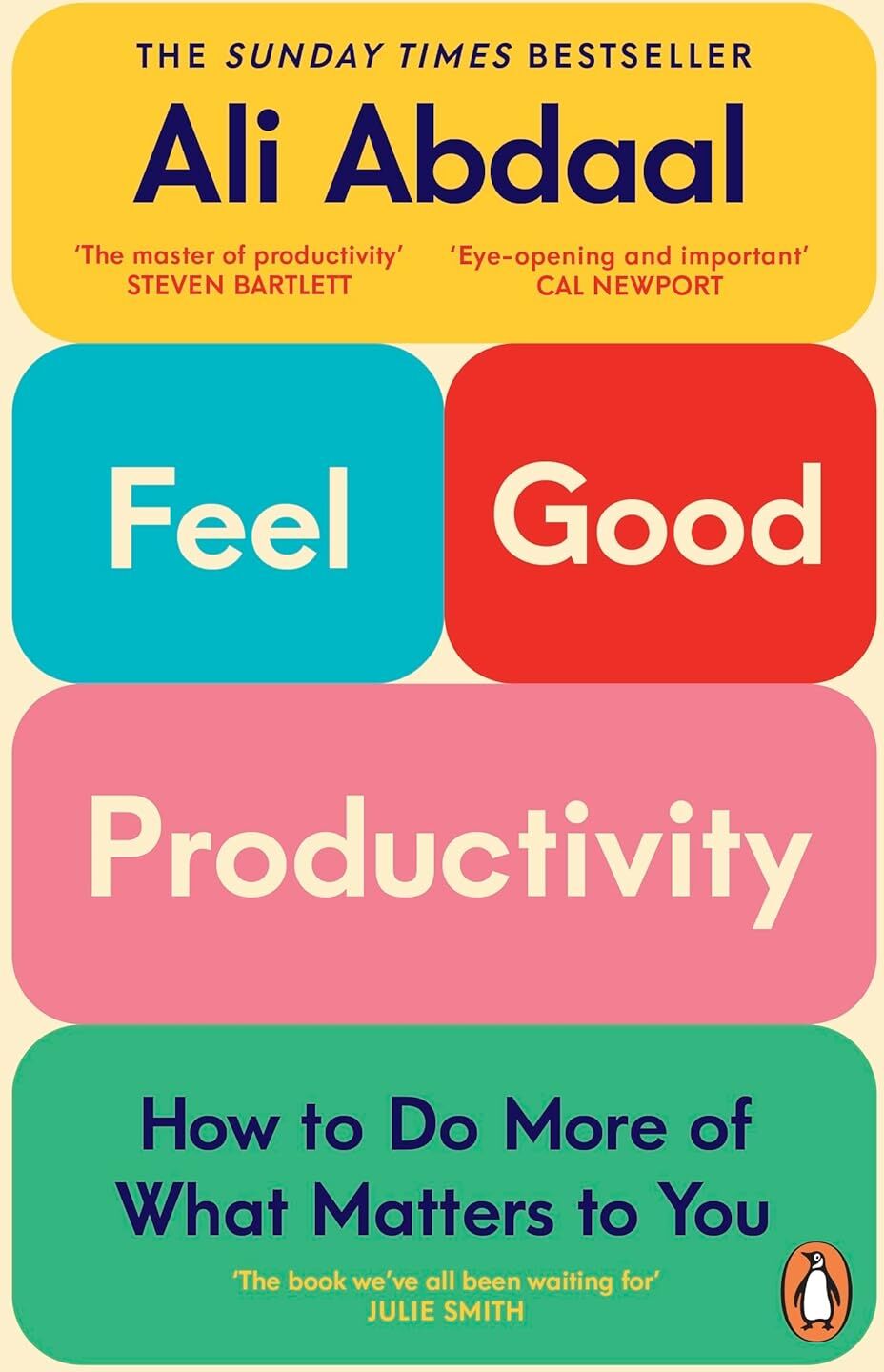
Cornerstone Feel-Good Productivity by Ali Abdaal - Paperback - Bestselling Self-Help & Productivity Book for AdultsDiscover a new approach to productivity with Feel-Good Productivity by Ali Abdaal. This non-fiction paperback book offers a guide to achieving more by finding genuine joy in your work, rather than relying on discipline and willpower. Backed by psychological research and Abdaal's own experience balancing medicine, business, and content creation, the book reframes productivity as a by-product of happiness. It's aimed at anyone feeling stuck in hustle culture and searching for a sustainable, guilt-free way to get things done while protecting their wellbeing and energy. In Feel-Good Productivity, Ali Abdaal dismantles the myth that success requires relentless grind and iron discipline. Instead, he presents a framework built around three 'energisers' — play, power, and people — showing readers how to inject more joy into everyday tasks so that motivation follows naturally rather than being forced. Drawing on peer-reviewed psychology, behaviour, and real-world experience, this book provides a fresh perspective on productivity and happiness.5,99 £*Shipping: 2,99 £Secure redirect to the provider


-
What is critical rationalism 2?
Critical rationalism 2 is an extension of the original critical rationalism philosophy developed by Karl Popper. It emphasizes the importance of critical thinking and skepticism in the pursuit of knowledge. This approach encourages individuals to actively seek out and challenge their own beliefs and assumptions, as well as those of others, in order to continually refine and improve their understanding of the world. Critical rationalism 2 also emphasizes the role of conjectures and refutations in the development of knowledge, and the recognition that all knowledge is fallible and subject to revision in light of new evidence. **
-
Would you prefer rationalism or empiricism?
As an AI language model, I do not have personal preferences. However, both rationalism and empiricism have their strengths and weaknesses. Rationalism emphasizes the role of reason and innate ideas in acquiring knowledge, while empiricism focuses on the importance of sensory experience and observation. Both approaches have contributed to our understanding of the world, and a balanced approach that incorporates elements of both rationalism and empiricism may be the most effective way to gain knowledge and understanding. **
-
How did Kant unite empiricism and rationalism?
Kant united empiricism and rationalism by proposing that both are necessary for a complete understanding of the world. He argued that our knowledge begins with sensory experience (empiricism), but it is then shaped and organized by our innate mental structures and concepts (rationalism). According to Kant, our minds actively construct our experience of the world by organizing sensory data according to certain a priori categories, such as space, time, and causality. This synthesis of empirical data and rational concepts allows us to have a more comprehensive understanding of the world. **
-
What is the difference between skepticism and rationalism?
Skepticism is the questioning of knowledge and beliefs, often doubting the certainty of truth claims and requiring evidence or justification for beliefs. Rationalism, on the other hand, is the belief that reason and logic are the primary sources of knowledge and justification for beliefs. While skepticism focuses on questioning and doubting beliefs, rationalism emphasizes the importance of reason and logical thinking in forming beliefs and understanding the world. **


What is the difference between empiricism and rationalism?
Empiricism is the belief that knowledge comes primarily from sensory experience and observation of the external world. Rationalism, on the other hand, is the belief that knowledge comes primarily from reason and logic. Empiricists rely on evidence and experimentation to support their beliefs, while rationalists prioritize deductive reasoning and innate ideas. In essence, empiricism emphasizes the importance of experience, while rationalism emphasizes the importance of reason. **
What is the difference between rationalism and empiricism?
Rationalism is the belief that knowledge is primarily derived from reason and innate ideas, while empiricism is the belief that knowledge is primarily derived from sensory experience and observation. Rationalists argue that certain truths can be known a priori, or independent of experience, while empiricists argue that all knowledge comes from a posteriori, or through experience. In essence, rationalism emphasizes the role of reason and deduction in acquiring knowledge, while empiricism emphasizes the role of observation and experimentation. **
Top-Angebote
Products related to Rationalism:
-
Ring Battery Video Doorbell Pro – Advanced Home Security & Connectivity, NewUpgrade your home security with the Ring Battery Video Doorbell Pro – Wireless Video Doorbell Security Camera . Designed to give you peace of mind, it delivers a head-to-toe 1536p HD view so you can see every detail clearly, from visitors to parcels at your doorstep. With advanced 3D Motion Detection and Bird’s Eye View , you’ll always know what’s happening around your home. The built-in colour night vision ensures crisp images even in the dark, while the wire-free battery design makes installation simple and flexible. Stay connected anywhere with instant notifications, two-way talk, and full integration with the Ring app, Alexa devices, and more. ✔️ Wireless video doorbell – Easy to install with a rechargeable battery, no wiring needed ✔️ 1536p HD head-to-toe view – See visitors and packages clearly in high definition ✔️ 3D Motion Detection & Bird’s Eye View – Advanced alerts and aerial perspective for extra security ✔️ Colour night vision – Crystal-clear video even in low light or darkness ✔️ Two-way talk with noise cancellation – Hear and speak to visitors in real time ✔️ Customisable motion zones – Focus on the areas that matter most ✔️ Smart alerts & notifications – Instant updates on your phone via the Ring app ✔️ Alexa compatible – Works seamlessly with Echo devices for hands-free monitoring ✔️ Quick-release battery pack – Easy to recharge and swap for uninterrupted security ✔️ Durable design – Built to withstand outdoor weather conditions The Ring Battery Video Doorbell Pro combines advanced motion detection, high-definition video, and smart home integration in one sleek device. Perfect for enhancing your home security, it ensures you never miss a visitor or delivery, day or night.174,49 £*Shipping: 0,00 £Secure redirect to the provider
-
Uplift Treasures Adjustable Car Accessibility Safety Handle Adjustable Car Accessibility Safety HandleProduct Description Make getting in and out of your vehicle safer and easier with this adjustable car accessibility safety handle. Designed to provide reliable support without tools, it installs quickly and offers a secure grip for seniors,...39,97 $*Shipping: 0,00 $Secure redirect to the provider
-
The Readers Paradise Psychology of Efficiency: Master Your Mind, Maximize Your Output by Rishav - Self-Help Paperback - Non Fiction Productivity BookDeadlines pile up, distractions multiply, and your to-do list never seems to shrink. Psychology of Efficiency: Master Your Mind, Maximize Your Output by Rishav goes beyond standard time-management advice to tackle the real root of low performance: the mind itself. Rather than offering another planner or app, this paperback guide explores the mental frameworks, habits, and triggers that quietly drain focus and output. Readers are shown how to identify exactly where attention leaks occur and how to close those gaps for good, building sustainable, high-level performance from the inside out. This brand new paperback is built around a simple idea: efficiency is first a psychological skill, not a scheduling trick. Rishav draws on practical psychology to show that thoughts shape actions, and actions determine results, so productivity becomes a manageable skill rather than an overwhelming task.2,99 £*Shipping: 2,99 £Secure redirect to the provider
-
Various Publishers How To Talk To Anyone by Leil Lowndes & Hyperfocus by Chris Bailey - 2 Book Paperback Set - Communication & Productivity Self-Help - NewThis two-book paperback set includes 'How To Talk To Anyone: 92 Little Tricks for Big Success in Relationships' by Leil Lowndes and 'Hyperfocus: How to Be More Productive in a World of Distraction' by Chris Bailey. 'How To Talk To Anyone' delivers practical techniques for confident, memorable conversation, while 'Hyperfocus' offers a science-backed system for reclaiming attention and getting more done with less effort. The books are in new condition, published by HarperCollins and Pan Macmillan respectively, and are suitable for adult readers.9,99 £*Shipping: 2,99 £Secure redirect to the provider
-
What is critical rationalism?
Critical rationalism is a philosophical approach that emphasizes the importance of critical thinking and skepticism in the pursuit of knowledge. It was developed by philosopher Karl Popper and is based on the idea that knowledge can never be fully justified or proven, but can only be tested and criticized. Critical rationalism encourages the constant questioning and testing of theories and beliefs, and rejects the notion of absolute truth. It also emphasizes the importance of openness to new ideas and the willingness to revise or abandon theories in the face of new evidence. **
-
What does rationalism mean?
Rationalism is a philosophical belief that emphasizes the role of reason and logic in understanding the world. It holds that knowledge is primarily derived from reason and intellectual processes, rather than from sensory experience or religious faith. Rationalists believe that certain truths can be known a priori, or independently of experience, through the use of reason. This approach to knowledge contrasts with empiricism, which emphasizes the importance of sensory experience in acquiring knowledge. **
-
What is critical rationalism 2?
Critical rationalism 2 is an extension of the original critical rationalism philosophy developed by Karl Popper. It emphasizes the importance of critical thinking and skepticism in the pursuit of knowledge. This approach encourages individuals to actively seek out and challenge their own beliefs and assumptions, as well as those of others, in order to continually refine and improve their understanding of the world. Critical rationalism 2 also emphasizes the role of conjectures and refutations in the development of knowledge, and the recognition that all knowledge is fallible and subject to revision in light of new evidence. **
-
Would you prefer rationalism or empiricism?
As an AI language model, I do not have personal preferences. However, both rationalism and empiricism have their strengths and weaknesses. Rationalism emphasizes the role of reason and innate ideas in acquiring knowledge, while empiricism focuses on the importance of sensory experience and observation. Both approaches have contributed to our understanding of the world, and a balanced approach that incorporates elements of both rationalism and empiricism may be the most effective way to gain knowledge and understanding. **
Similar search terms for Rationalism
-
Sesderma Reti Age 5 Liposomal Serum Anti-Aging Innovation 30mLA facial serum for wrinkles and signs of ageing. Reduces wrinkles and fine lines. Hydrates and strengthens barrier. Restores youthful radiance. 5-Retinoid System: smooths wrinkles, accelerates renewal, and boosts collagen. Biomimetic Peptides: fill expression lines by stimulating collagen synthesis.53,26 £*Shipping: 5,22 £Secure redirect to the provider
-
Cornerstone Feel-Good Productivity by Ali Abdaal - Paperback - Bestselling Self-Help & Productivity Book for AdultsDiscover a new approach to productivity with Feel-Good Productivity by Ali Abdaal. This non-fiction paperback book offers a guide to achieving more by finding genuine joy in your work, rather than relying on discipline and willpower. Backed by psychological research and Abdaal's own experience balancing medicine, business, and content creation, the book reframes productivity as a by-product of happiness. It's aimed at anyone feeling stuck in hustle culture and searching for a sustainable, guilt-free way to get things done while protecting their wellbeing and energy. In Feel-Good Productivity, Ali Abdaal dismantles the myth that success requires relentless grind and iron discipline. Instead, he presents a framework built around three 'energisers' — play, power, and people — showing readers how to inject more joy into everyday tasks so that motivation follows naturally rather than being forced. Drawing on peer-reviewed psychology, behaviour, and real-world experience, this book provides a fresh perspective on productivity and happiness.5,99 £*Shipping: 2,99 £Secure redirect to the provider
-
DEVERA Hanger and Full-length Mirror IntegrationSpecification Main Material: Rubber Wood,Solid Wood,Wood+Glass Product Style: American Design,Artsy,Beach,Contemporary,European Product Features Product Information: Full-length mirror, solid wood + rubber wood + glass, 68.8*19.6in (mirror width:...349,99 $*Shipping: 0,00 $Secure redirect to the provider
-
DEVERA Hanger and Full-length Mirror IntegrationSpecification Main Material: Rubber Wood,Solid Wood,Wood+Glass Product Style: American Design,Art Deco,Artsy,Contemporary,European Product Features Product Information: Full-length mirror, solid wood + rubber wood + glass, 65.7*17.7in (mirror width:…302,39 $*Shipping: 0,00 $Secure redirect to the provider
-
How did Kant unite empiricism and rationalism?
Kant united empiricism and rationalism by proposing that both are necessary for a complete understanding of the world. He argued that our knowledge begins with sensory experience (empiricism), but it is then shaped and organized by our innate mental structures and concepts (rationalism). According to Kant, our minds actively construct our experience of the world by organizing sensory data according to certain a priori categories, such as space, time, and causality. This synthesis of empirical data and rational concepts allows us to have a more comprehensive understanding of the world. **
-
What is the difference between skepticism and rationalism?
Skepticism is the questioning of knowledge and beliefs, often doubting the certainty of truth claims and requiring evidence or justification for beliefs. Rationalism, on the other hand, is the belief that reason and logic are the primary sources of knowledge and justification for beliefs. While skepticism focuses on questioning and doubting beliefs, rationalism emphasizes the importance of reason and logical thinking in forming beliefs and understanding the world. **
-
What is the difference between empiricism and rationalism?
Empiricism is the belief that knowledge comes primarily from sensory experience and observation of the external world. Rationalism, on the other hand, is the belief that knowledge comes primarily from reason and logic. Empiricists rely on evidence and experimentation to support their beliefs, while rationalists prioritize deductive reasoning and innate ideas. In essence, empiricism emphasizes the importance of experience, while rationalism emphasizes the importance of reason. **
-
What is the difference between rationalism and empiricism?
Rationalism is the belief that knowledge is primarily derived from reason and innate ideas, while empiricism is the belief that knowledge is primarily derived from sensory experience and observation. Rationalists argue that certain truths can be known a priori, or independent of experience, while empiricists argue that all knowledge comes from a posteriori, or through experience. In essence, rationalism emphasizes the role of reason and deduction in acquiring knowledge, while empiricism emphasizes the role of observation and experimentation. **
* All prices are inclusive of VAT and, if applicable, plus shipping costs. The offer information is based on the details provided by the respective shop and is updated through automated processes. Real-time updates do not occur, so deviations can occur in individual cases. ** Note: Parts of this content were created by AI.