Buy mobilesolution.eu ?
We are moving the project
mobilesolution.eu .
Are you interested in purchasing the domain
mobilesolution.eu ?
domain@kv-gmbh.de · 0541-91531010
Buy mobilesolution.eu ?
Are wages liabilities?
Yes, wages are considered liabilities for a company because they represent an obligation to pay employees for their work. From an accounting perspective, wages are typically recorded as a liability on the company's balance sheet until they are paid to the employees. This reflects the company's obligation to fulfill its financial commitments to its employees. Therefore, wages are classified as a liability until they are settled. **
What are liabilities and receivables?
Liabilities are obligations or debts that a company owes to external parties, such as loans, accounts payable, or accrued expenses. They represent the company's financial responsibilities that must be settled in the future. Receivables, on the other hand, are amounts owed to a company by its customers or other parties for goods or services provided. They represent the company's right to receive payment and are considered assets on the company's balance sheet. Both liabilities and receivables are important components of a company's financial position and are crucial for assessing its overall financial health. **


Similar search terms for Liabilities
Top-Angebote
Products related to Liabilities:
-
The Readers Paradise Psychology of Efficiency: Master Your Mind, Maximize Your Output by Rishav - Self-Help Paperback - Non Fiction Productivity BookDeadlines pile up, distractions multiply, and your to-do list never seems to shrink. Psychology of Efficiency: Master Your Mind, Maximize Your Output by Rishav goes beyond standard time-management advice to tackle the real root of low performance: the mind itself. Rather than offering another planner or app, this paperback guide explores the mental frameworks, habits, and triggers that quietly drain focus and output. Readers are shown how to identify exactly where attention leaks occur and how to close those gaps for good, building sustainable, high-level performance from the inside out. This brand new paperback is built around a simple idea: efficiency is first a psychological skill, not a scheduling trick. Rishav draws on practical psychology to show that thoughts shape actions, and actions determine results, so productivity becomes a manageable skill rather than an overwhelming task.2,99 £*Shipping: 2,99 £Secure redirect to the provider
-
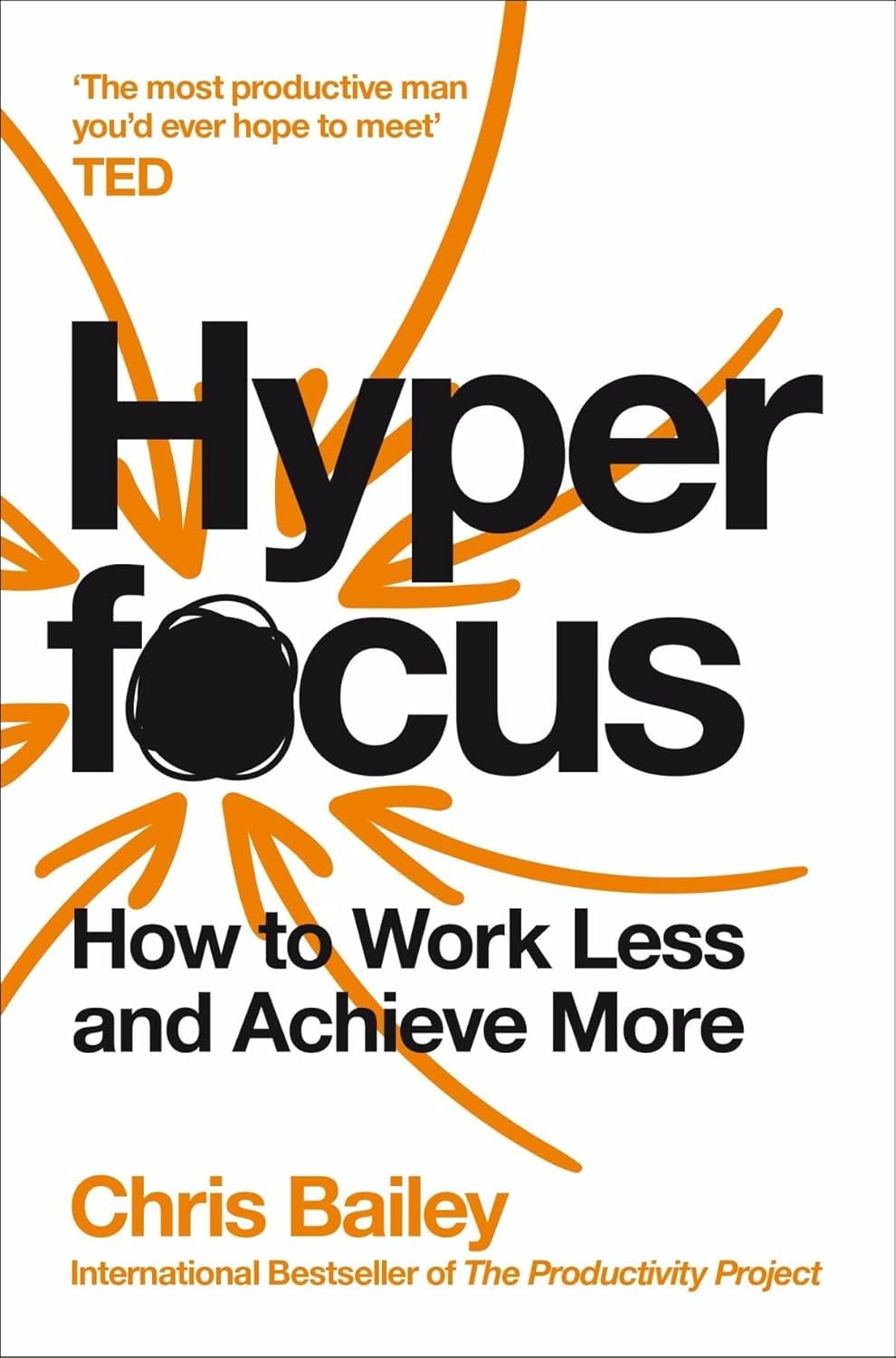
Various Publishers How To Talk To Anyone by Leil Lowndes & Hyperfocus by Chris Bailey - 2 Book Paperback Set - Communication & Productivity Self-Help - NewThis two-book paperback set includes 'How To Talk To Anyone: 92 Little Tricks for Big Success in Relationships' by Leil Lowndes and 'Hyperfocus: How to Be More Productive in a World of Distraction' by Chris Bailey. 'How To Talk To Anyone' delivers practical techniques for confident, memorable conversation, while 'Hyperfocus' offers a science-backed system for reclaiming attention and getting more done with less effort. The books are in new condition, published by HarperCollins and Pan Macmillan respectively, and are suitable for adult readers.9,99 £*Shipping: 2,99 £Secure redirect to the provider
-
Sesderma Reti Age 5 Liposomal Serum Anti-Aging Innovation 30mLA facial serum for wrinkles and signs of ageing. Reduces wrinkles and fine lines. Hydrates and strengthens barrier. Restores youthful radiance. 5-Retinoid System: smooths wrinkles, accelerates renewal, and boosts collagen. Biomimetic Peptides: fill expression lines by stimulating collagen synthesis.53,26 £*Shipping: 5,22 £Secure redirect to the provider
-
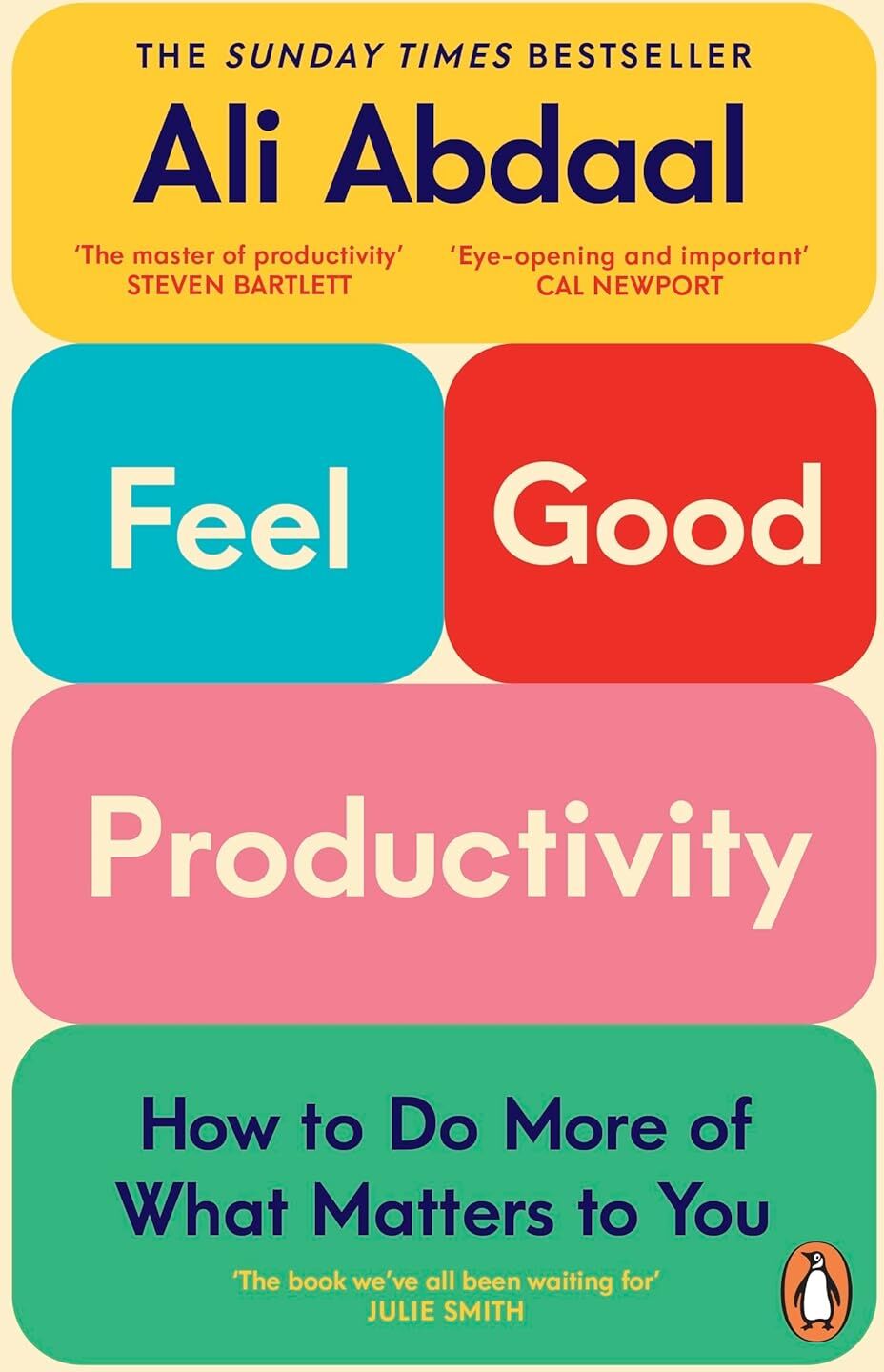
Cornerstone Feel-Good Productivity by Ali Abdaal - Paperback - Bestselling Self-Help & Productivity Book for AdultsDiscover a new approach to productivity with Feel-Good Productivity by Ali Abdaal. This non-fiction paperback book offers a guide to achieving more by finding genuine joy in your work, rather than relying on discipline and willpower. Backed by psychological research and Abdaal's own experience balancing medicine, business, and content creation, the book reframes productivity as a by-product of happiness. It's aimed at anyone feeling stuck in hustle culture and searching for a sustainable, guilt-free way to get things done while protecting their wellbeing and energy. In Feel-Good Productivity, Ali Abdaal dismantles the myth that success requires relentless grind and iron discipline. Instead, he presents a framework built around three 'energisers' — play, power, and people — showing readers how to inject more joy into everyday tasks so that motivation follows naturally rather than being forced. Drawing on peer-reviewed psychology, behaviour, and real-world experience, this book provides a fresh perspective on productivity and happiness.5,99 £*Shipping: 2,99 £Secure redirect to the provider


-
What are transitory assets and/or liabilities?
Transitory assets and/or liabilities are items on a company's balance sheet that are expected to be settled or used up within a relatively short period of time, typically within one year. These items are considered to be temporary in nature and are not expected to have a long-term impact on the company's financial position. Examples of transitory assets include cash, accounts receivable, and inventory, while examples of transitory liabilities include accounts payable and short-term debt. It is important for investors and analysts to understand the nature of these transitory items when evaluating a company's financial health and performance. **
-
Why is equity on the liabilities side?
Equity is placed on the liabilities side of the balance sheet because it represents the claims of the company's owners or shareholders on the company's assets. It is considered a liability because the company has an obligation to its owners to repay their investment in the business. However, unlike other liabilities, equity does not have a fixed repayment schedule and is considered a residual claim, meaning it is only paid out after all other liabilities have been settled. Therefore, equity is categorized as a liability on the balance sheet to accurately reflect the financial obligations of the company. **
-
How are the assets and liabilities evaluated?
Assets and liabilities are evaluated based on their current market value or book value. For assets, this means determining their fair market value, which is the price that they could be sold for in the current market. Liabilities are evaluated based on their current outstanding balance or the amount that is owed. This evaluation helps to determine the financial health and position of a company, as well as its ability to meet its financial obligations. **
-
What is a statement of assets and liabilities?
A statement of assets and liabilities is a financial document that provides a snapshot of an individual's or organization's financial position at a specific point in time. It lists all the assets, such as cash, investments, property, and equipment, as well as all the liabilities, such as loans, mortgages, and other debts. The statement helps to assess the overall financial health and solvency of the entity by comparing the total assets to the total liabilities. It is an essential tool for financial planning, decision-making, and assessing the ability to meet financial obligations. **


How can liabilities be settled in other ways?
Liabilities can be settled in other ways through various means such as debt restructuring, where the terms of the debt are renegotiated to make it more manageable for the debtor. Another way is through debt-for-equity swaps, where the creditor agrees to convert the debt into an ownership stake in the debtor's company. Additionally, liabilities can be settled through the sale of assets, where the debtor sells off assets to generate cash to pay off the liabilities. Finally, some liabilities can be settled through the issuance of new debt to replace the existing liabilities, known as refinancing. **
What is the difference between receivables and liabilities?
Receivables are amounts owed to a company by its customers or other parties for goods or services provided, while liabilities are obligations or debts that a company owes to its creditors or other parties. In other words, receivables represent money that is owed to the company, while liabilities represent money that the company owes to others. Receivables are considered assets on the company's balance sheet, while liabilities are recorded as obligations or debts. **
Top-Angebote
Products related to Liabilities:
-
Ring Battery Video Doorbell Pro – Advanced Home Security & Connectivity, NewUpgrade your home security with the Ring Battery Video Doorbell Pro – Wireless Video Doorbell Security Camera . Designed to give you peace of mind, it delivers a head-to-toe 1536p HD view so you can see every detail clearly, from visitors to parcels at your doorstep. With advanced 3D Motion Detection and Bird’s Eye View , you’ll always know what’s happening around your home. The built-in colour night vision ensures crisp images even in the dark, while the wire-free battery design makes installation simple and flexible. Stay connected anywhere with instant notifications, two-way talk, and full integration with the Ring app, Alexa devices, and more. ✔️ Wireless video doorbell – Easy to install with a rechargeable battery, no wiring needed ✔️ 1536p HD head-to-toe view – See visitors and packages clearly in high definition ✔️ 3D Motion Detection & Bird’s Eye View – Advanced alerts and aerial perspective for extra security ✔️ Colour night vision – Crystal-clear video even in low light or darkness ✔️ Two-way talk with noise cancellation – Hear and speak to visitors in real time ✔️ Customisable motion zones – Focus on the areas that matter most ✔️ Smart alerts & notifications – Instant updates on your phone via the Ring app ✔️ Alexa compatible – Works seamlessly with Echo devices for hands-free monitoring ✔️ Quick-release battery pack – Easy to recharge and swap for uninterrupted security ✔️ Durable design – Built to withstand outdoor weather conditions The Ring Battery Video Doorbell Pro combines advanced motion detection, high-definition video, and smart home integration in one sleek device. Perfect for enhancing your home security, it ensures you never miss a visitor or delivery, day or night.174,49 £*Shipping: 0,00 £Secure redirect to the provider
-
Uplift Treasures Adjustable Car Accessibility Safety Handle Adjustable Car Accessibility Safety HandleProduct Description Make getting in and out of your vehicle safer and easier with this adjustable car accessibility safety handle. Designed to provide reliable support without tools, it installs quickly and offers a secure grip for seniors,...39,97 $*Shipping: 0,00 $Secure redirect to the provider
-
The Readers Paradise Psychology of Efficiency: Master Your Mind, Maximize Your Output by Rishav - Self-Help Paperback - Non Fiction Productivity BookDeadlines pile up, distractions multiply, and your to-do list never seems to shrink. Psychology of Efficiency: Master Your Mind, Maximize Your Output by Rishav goes beyond standard time-management advice to tackle the real root of low performance: the mind itself. Rather than offering another planner or app, this paperback guide explores the mental frameworks, habits, and triggers that quietly drain focus and output. Readers are shown how to identify exactly where attention leaks occur and how to close those gaps for good, building sustainable, high-level performance from the inside out. This brand new paperback is built around a simple idea: efficiency is first a psychological skill, not a scheduling trick. Rishav draws on practical psychology to show that thoughts shape actions, and actions determine results, so productivity becomes a manageable skill rather than an overwhelming task.2,99 £*Shipping: 2,99 £Secure redirect to the provider
-
Various Publishers How To Talk To Anyone by Leil Lowndes & Hyperfocus by Chris Bailey - 2 Book Paperback Set - Communication & Productivity Self-Help - NewThis two-book paperback set includes 'How To Talk To Anyone: 92 Little Tricks for Big Success in Relationships' by Leil Lowndes and 'Hyperfocus: How to Be More Productive in a World of Distraction' by Chris Bailey. 'How To Talk To Anyone' delivers practical techniques for confident, memorable conversation, while 'Hyperfocus' offers a science-backed system for reclaiming attention and getting more done with less effort. The books are in new condition, published by HarperCollins and Pan Macmillan respectively, and are suitable for adult readers.9,99 £*Shipping: 2,99 £Secure redirect to the provider
-
Are wages liabilities?
Yes, wages are considered liabilities for a company because they represent an obligation to pay employees for their work. From an accounting perspective, wages are typically recorded as a liability on the company's balance sheet until they are paid to the employees. This reflects the company's obligation to fulfill its financial commitments to its employees. Therefore, wages are classified as a liability until they are settled. **
-
What are liabilities and receivables?
Liabilities are obligations or debts that a company owes to external parties, such as loans, accounts payable, or accrued expenses. They represent the company's financial responsibilities that must be settled in the future. Receivables, on the other hand, are amounts owed to a company by its customers or other parties for goods or services provided. They represent the company's right to receive payment and are considered assets on the company's balance sheet. Both liabilities and receivables are important components of a company's financial position and are crucial for assessing its overall financial health. **
-
What are transitory assets and/or liabilities?
Transitory assets and/or liabilities are items on a company's balance sheet that are expected to be settled or used up within a relatively short period of time, typically within one year. These items are considered to be temporary in nature and are not expected to have a long-term impact on the company's financial position. Examples of transitory assets include cash, accounts receivable, and inventory, while examples of transitory liabilities include accounts payable and short-term debt. It is important for investors and analysts to understand the nature of these transitory items when evaluating a company's financial health and performance. **
-
Why is equity on the liabilities side?
Equity is placed on the liabilities side of the balance sheet because it represents the claims of the company's owners or shareholders on the company's assets. It is considered a liability because the company has an obligation to its owners to repay their investment in the business. However, unlike other liabilities, equity does not have a fixed repayment schedule and is considered a residual claim, meaning it is only paid out after all other liabilities have been settled. Therefore, equity is categorized as a liability on the balance sheet to accurately reflect the financial obligations of the company. **
Similar search terms for Liabilities
-
Sesderma Reti Age 5 Liposomal Serum Anti-Aging Innovation 30mLA facial serum for wrinkles and signs of ageing. Reduces wrinkles and fine lines. Hydrates and strengthens barrier. Restores youthful radiance. 5-Retinoid System: smooths wrinkles, accelerates renewal, and boosts collagen. Biomimetic Peptides: fill expression lines by stimulating collagen synthesis.53,26 £*Shipping: 5,22 £Secure redirect to the provider
-
Cornerstone Feel-Good Productivity by Ali Abdaal - Paperback - Bestselling Self-Help & Productivity Book for AdultsDiscover a new approach to productivity with Feel-Good Productivity by Ali Abdaal. This non-fiction paperback book offers a guide to achieving more by finding genuine joy in your work, rather than relying on discipline and willpower. Backed by psychological research and Abdaal's own experience balancing medicine, business, and content creation, the book reframes productivity as a by-product of happiness. It's aimed at anyone feeling stuck in hustle culture and searching for a sustainable, guilt-free way to get things done while protecting their wellbeing and energy. In Feel-Good Productivity, Ali Abdaal dismantles the myth that success requires relentless grind and iron discipline. Instead, he presents a framework built around three 'energisers' — play, power, and people — showing readers how to inject more joy into everyday tasks so that motivation follows naturally rather than being forced. Drawing on peer-reviewed psychology, behaviour, and real-world experience, this book provides a fresh perspective on productivity and happiness.5,99 £*Shipping: 2,99 £Secure redirect to the provider
-
Stealth Gaming Headset Stand - Black - USB Connectivity - RGB LightingElevate your gaming or work setup with the Stealth Glow Light-Up Gaming Headset Stand. Its sleek, curved black frame supports a wide range of headsets, while the weighted, non-slip base keeps it stable on your desk. The stand's base and trim feature customizable RGB lighting, allowing you to cycle through 12 different effects, including animated and static options, using the control button. The stand is powered through its attached USB cable and includes two accessible ports for compatible devices: one USB-A port and one USB-C port. No assembly is required - simply position the stand, connect its power cable, and select your preferred lighting effect. The Stealth Glow Light-Up Gaming Headset Stand is suitable for headsets used with PlayStation, Xbox, Nintendo Switch, PC, and compatible mobile devices. Headset and USB power adapter are not included.16,40 £*Shipping: 3,95 £Secure redirect to the provider
-
DEVERA Hanger and Full-length Mirror IntegrationSpecification Main Material: Rubber Wood,Solid Wood,Wood+Glass Product Style: American Design,Art Deco,Artsy,Contemporary,European Product Features Product Information: Full-length mirror, solid wood + rubber wood + glass, 65.7*17.7in (mirror width:…302,39 $*Shipping: 0,00 $Secure redirect to the provider
-
How are the assets and liabilities evaluated?
Assets and liabilities are evaluated based on their current market value or book value. For assets, this means determining their fair market value, which is the price that they could be sold for in the current market. Liabilities are evaluated based on their current outstanding balance or the amount that is owed. This evaluation helps to determine the financial health and position of a company, as well as its ability to meet its financial obligations. **
-
What is a statement of assets and liabilities?
A statement of assets and liabilities is a financial document that provides a snapshot of an individual's or organization's financial position at a specific point in time. It lists all the assets, such as cash, investments, property, and equipment, as well as all the liabilities, such as loans, mortgages, and other debts. The statement helps to assess the overall financial health and solvency of the entity by comparing the total assets to the total liabilities. It is an essential tool for financial planning, decision-making, and assessing the ability to meet financial obligations. **
-
How can liabilities be settled in other ways?
Liabilities can be settled in other ways through various means such as debt restructuring, where the terms of the debt are renegotiated to make it more manageable for the debtor. Another way is through debt-for-equity swaps, where the creditor agrees to convert the debt into an ownership stake in the debtor's company. Additionally, liabilities can be settled through the sale of assets, where the debtor sells off assets to generate cash to pay off the liabilities. Finally, some liabilities can be settled through the issuance of new debt to replace the existing liabilities, known as refinancing. **
-
What is the difference between receivables and liabilities?
Receivables are amounts owed to a company by its customers or other parties for goods or services provided, while liabilities are obligations or debts that a company owes to its creditors or other parties. In other words, receivables represent money that is owed to the company, while liabilities represent money that the company owes to others. Receivables are considered assets on the company's balance sheet, while liabilities are recorded as obligations or debts. **
* All prices are inclusive of VAT and, if applicable, plus shipping costs. The offer information is based on the details provided by the respective shop and is updated through automated processes. Real-time updates do not occur, so deviations can occur in individual cases. ** Note: Parts of this content were created by AI.